Moonseed Congkak

Luca
| 28-11-2026
 · Lifestyle Team
Hi, Lykkers! A traditional board game can offer more than simple entertainment. It can encourage logical thinking, patience, and meaningful interaction between players.
In Malaysia, congkak is a familiar traditional game that combines counting skills with strategic decision-making.
Played using a wooden board and small movable pieces, it remains an enjoyable activity for families, schools, and cultural enthusiasts.
The concept of "Congkak Moonseed Path" provides a creative perspective on this heritage, imagining each playing piece as a seed travelling through a pathway of interconnected wooden hollows.
Understanding the Malaysian Congkak Game
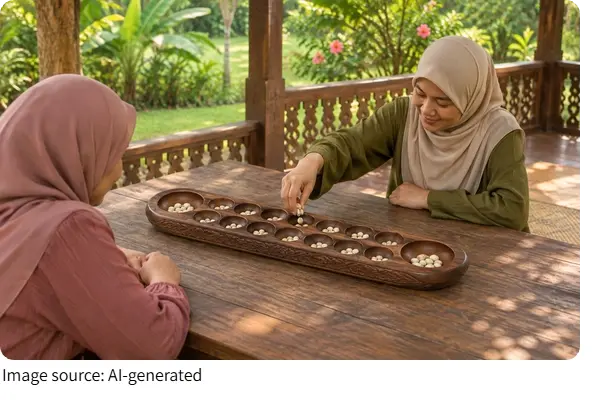
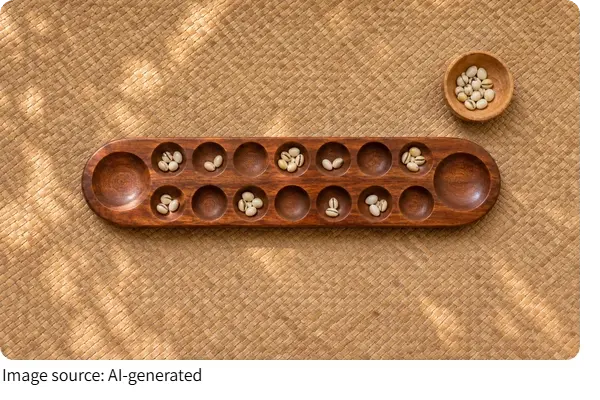
Congkak belongs to a wider family of traditional mancala games played in different parts of the world. Its Malaysian version commonly features a long wooden board with two rows of seven small holes and a larger storage hole, known as a rumah, at each end.
Players traditionally use small objects such as tamarind seeds, shells, or marbles as playing pieces. The objective is to collect as many pieces as possible in the designated storage hole through careful distribution and planning.
Although the rules may vary slightly between communities, the basic gameplay involves selecting a hole, collecting its contents, and distributing the pieces one by one into subsequent holes. The final position of a move can determine whether a player receives another turn or captures additional pieces.
This simple structure creates opportunities for surprisingly complex decisions.
The Meaning Behind Moonseed Path
The phrase "Moonseed Path" can be interpreted as an imaginative design theme inspired by the natural appearance of seeds and the flowing movement of congkak pieces. It is a creative concept rather than a recognised traditional category of the game.
A Moonseed-inspired board could feature crescent-shaped carvings, subtle botanical patterns, and smooth wooden surfaces. Small decorative seed motifs might be incorporated around the playing holes, while natural brown, cream, and muted gold tones create an elegant appearance.
The concept also reflects the way individual seeds travel through the board during each turn. Every movement changes the arrangement of pieces, encouraging players to consider several possible outcomes before making a decision.
How to Play Congkak
Congkak is relatively easy to learn, making it suitable for beginners and experienced players alike. A typical game follows these steps:
- Prepare the board: Place an equal number of seeds in each small hole, according to the chosen rules.
- Choose a starting hole: Each player selects a hole on their side of the board.
- Distribute the seeds: Pick up all the pieces from that hole and place them one by one into the following holes.
- Observe the final position: Depending on where the last seed lands, the player may receive another turn, capture pieces, or finish the move.
- Count the collected seeds: The player with the most pieces in their storage hole at the end wins.
Before starting, players should agree on the rules because variations exist. Beginners may benefit from practising with fewer pieces to understand the distribution pattern.
Benefits of Playing Congkak
Beyond entertainment, congkak offers several practical learning benefits. Counting seeds helps younger players become more comfortable with numbers and basic arithmetic. Planning each move encourages logical thinking, while observing the opponent's choices introduces strategic awareness.
The game also supports patience and concentration. Players must follow the movement of individual pieces and consider how each decision affects the remaining board. Because congkak is played face-to-face, it can also encourage communication and friendly competition.
For families, it provides an opportunity to enjoy an activity that does not require screens or electronic equipment.
Caring for a Congkak Board
Traditional wooden boards can remain attractive for many years when maintained properly. Wipe the surface with a soft, dry cloth after use and avoid leaving the board in damp areas. Excessive moisture may cause wood to expand or develop damage.
Store the seeds or playing pieces in a separate container to prevent them from becoming lost. If the board has decorative carvings, use a soft brush to remove dust from small details.
When purchasing a congkak set, examine the smoothness of the holes, the stability of the board, and the quality of its finishing.
Keeping a Traditional Game Alive
Congkak demonstrates how a simple combination of counting, movement, and strategy can create an engaging experience. Through school activities, family gatherings, and cultural workshops, the game can continue introducing new generations to traditional Malaysian recreation.