Why Animals Find Home

Elise
| 06-11-2026
 · Animal Team
Hi, Readers! Some animals seem to carry an invisible map in their heads, like they secretly borrowed the planet’s navigation app and never gave it back.
They cross oceans, deserts, forests, and skies, then somehow arrive exactly where they need to be. That strong sense of direction is not one single trick.
It is more like a packed toolbox, with different species using different clues from the world around them. Scientists call this animal navigation, and it includes the ways animals orient themselves, choose routes, and return to important places such as nesting grounds, feeding areas, or seasonal homes.
One major reason some animals are so good at finding their way is that they can read environmental signals with incredible precision. Many use the sun as a compass. If an animal can track the sun’s position and match it with an internal sense of time, it can keep a steady direction even while the sun shifts across the sky. Others use the stars, which is especially helpful for night travelers. It is like having a ceiling full of reliable road signs. These sky-based clues are useful over long distances, especially when landmarks are missing or the landscape looks like one giant copy-and-paste job.
Earth As A Compass
Another fascinating tool is Earth’s magnetic field. Some animals can detect magnetic cues and use them like a built-in compass. Birds are among the most famous examples, but they are not alone. This ability, often called magnetoreception, may help animals determine direction, and in some cases possibly location, during long journeys. Think of it as carrying a tiny compass tucked into your senses. Humans mostly stumble around with maps and apps, while some creatures appear to be tuned directly into the planet itself.
Scent, Sound, And Landmarks
Not every navigator depends on the sky or magnetic signals. Some animals rely heavily on smell. Scent can act like an invisible trail system, especially in places where odors linger and spread in recognizable patterns. Others use sound, water flow, wave direction, or familiar visual landmarks. A coastline, mountain edge, river path, or even the arrangement of nearby features can help create a mental picture of a route. In that sense, navigation is a little like knowing your neighborhood so well that one corner shop and one crooked tree are enough to tell you exactly where you are.
Memory And Learning Matter Too
Strong direction sense is also tied to memory and experience. Animals are not always born with a complete route charted out. In many cases, they improve through learning, repetition, and combining several kinds of information at once. An animal may begin with an inherited tendency to move in a certain direction, then sharpen that journey by remembering landmarks, smells, and past paths. This makes navigation flexible rather than rigid. If one clue disappears, another may still help. It is less like following one painted line and more like solving a puzzle with several matching pieces.
Different Jobs, Different Tools
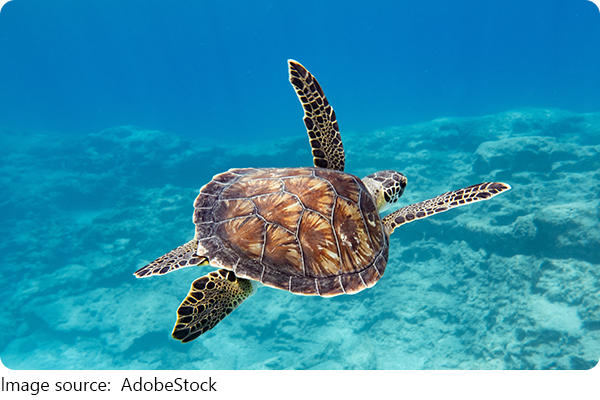
Why do some animals have especially strong navigation skills? Usually because their lives demand it. Migration, food searching, nesting, and returning home all reward accurate movement. Species that travel far or must return to very specific locations are under stronger pressure to develop reliable navigation systems. Over time, those abilities become highly refined. A seabird crossing open water, a turtle returning to lay eggs, or an insect moving between feeding and breeding areas cannot afford to just wander and hope for the best. Nature tends to reward creatures that can travel with purpose.
In the end, animals have a strong sense of direction because evolution has equipped them with a remarkable mix of compass tools, sensory talents, and memory. Some read the sun, some sense magnetic fields, some follow scent or landmarks, and many combine several methods at once. The result is one of the most impressive skills in the natural world. Next time you struggle to find a parked car, just remember that somewhere out there, a tiny traveler is crossing huge distances with a level of confidence most of us can only envy.