Round or Long Dinning Table?

Pankaj Singh
| 26-09-2026
 · Lifestyle Team
Welcome back, everyone. You'd think picking a dining table is just about size, right?
Measure the room, buy something that fits, done. But the shape of that table changes how you move around the room, how you talk to the person across from you, and honestly, how often you actually want to sit down at it.
Round and long tables aren't interchangeable, and the right choice depends on your floor plan and your daily rhythm, not just what looks good in a catalog photo.
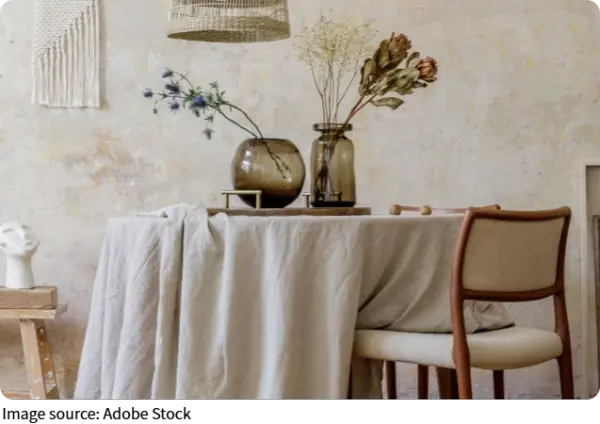
Round tables shrink the room
A round table is the best trick for a tight or awkward space. With no corners, you can squeeze it into a nook a rectangle would never fit in, and still seat four or six.
A typical 48-inch round table fits comfortably in a 10-by-10-foot dining area, while a comparable rectangular table needs at least a foot more in every direction to allow for chair pull-out.
Plus, you never bump your hip on a sharp corner when you walk to the kitchen. That alone wins for narrow galley-style apartments.
Long tables set the conversation
Here's the flip side. A rectangular table creates a clear head of the table, which matters if you host structured dinners or family meals where you want to lead the conversation. It also gives you more usable surface length for serving dishes, homework, or a laptop during the day.
A 72-inch-long table seats six comfortably, but the people at the ends will struggle to chat with each other. If your guests like mingling across the whole group, that's a real drawback. You're effectively running two separate conversations.
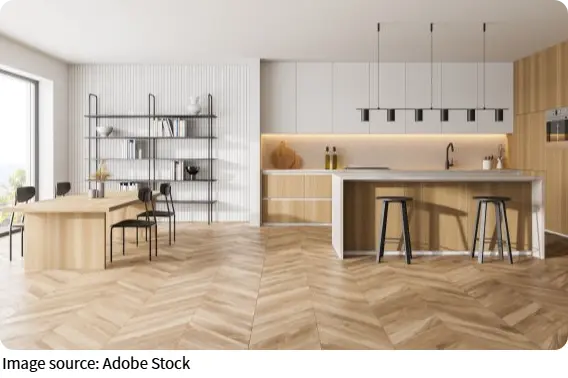
Match the shape to your habits
Think about how you actually eat. If you're a couple who mostly eats side by side while watching something on a tablet, a round table puts you at a weird angle, facing half away from each other. A small rectangular bistro table, like a 30-inch-wide model, works better for that setup.
But if you host big family-style meals where everyone passes plates and talks across the table, round wins. The 60-inch round size lets six people reach the center dish without standing up, which you just can't do at a long table without a lot of reaching.
What about the corners in small homes
For open-plan living, think about traffic flow. A round table in the middle of the room lets you walk around it easily from any direction, which matters when your dining area doubles as a passage to the balcony or hallway.
A long table acts more like a wall, it channels movement around its ends. In a studio or one-bedroom, that can make the space feel chopped up.
Also, consider the leaf. Many rectangular tables come with a drop-in leaf that takes you from four seats to six, round tables rarely offer that flexibility, so you're committing to one capacity.
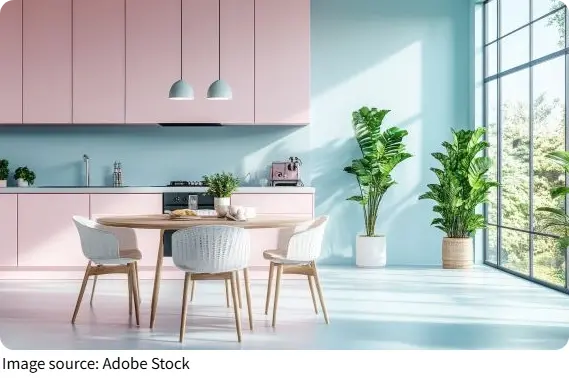
The shape that changes your walls
Don't forget the visual side, even if it's not your priority. A round table softens a room full of straight lines, like a kitchen with square cabinets and a long sofa. A rectangular table reinforces a formal, symmetrical look. If you have a bay window or an angled wall, a round table tucks into that curve beautifully, while a rectangle leaves awkward gaps behind it.
It's a small detail, but it changes how finished the room feels. One more thing, check your light fixture. A round table pairs naturally with a single pendant centered above it, while a long table often needs two pendants or a linear track light to cover the full length.
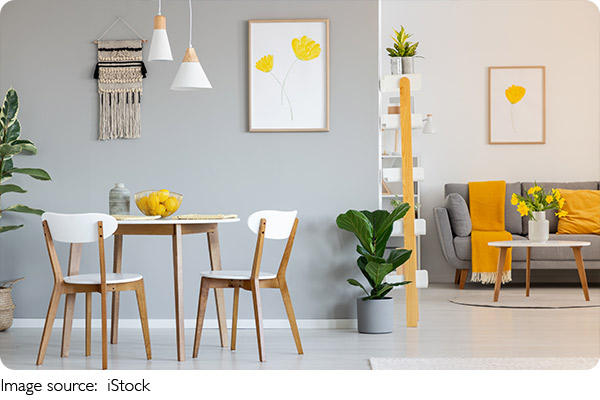
When you're standing in the showroom, it's easy to fall for the long, grand table. But go home and measure your daily reality first. Walk the path from the stove to the table, count how many people you usually feed, and think about whether you want one big conversation or a few side chats.
The right shape is the one that makes you sit down longer, not the one that fills the room. Next time you're shopping, bring a tape measure and a piece of string, and trace out both shapes on the floor. You'll know in five minutes which one feels right.