Badminton Basics

Naveen Kumar
| 14-02-2026
 · Sport Team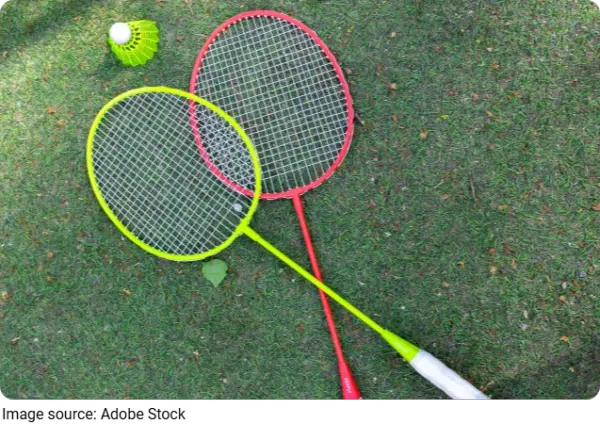
Walking into a badminton hall for the first time can feel overwhelming—the fast shuttlecock, the swift footwork, and the polished rackets everywhere.
But the good news is, badminton is surprisingly approachable once you break it down into basics.
A few foundational skills, the right gear, and understanding simple strategies can turn any beginner into a confident player.
Choosing the Right Racket and Shuttlecock
Finding equipment that fits your style makes a huge difference.
Rackets: Lighter rackets, around 85–90 grams, are easier to maneuver for beginners. Grip size matters too; hold the handle comfortably without straining your fingers.
Shuttlecock: Nylon shuttlecocks are more durable and consistent for practice, while feathered ones are used in competitive settings for better flight.
Actionable tip: Try swinging a few rackets in-store to feel the weight balance. Even slight differences can affect your control and comfort during rallies.
Mastering Basic Hits
Your ability to hit the shuttle consistently depends on understanding basic techniques.
Forehand and backhand clears: These are high shots to push your opponent to the back of the court. Focus on smooth wrist movement rather than force.
Drop shots: Softly hit the shuttle to land just over the net. Timing and control are more important than power.
Smash: A fast downward hit to finish a point. Beginners should focus on accuracy first; power comes later.
Actionable tip: Practice each hit ten times daily against a wall or with a partner. This builds muscle memory and improves consistency.
Footwork Fundamentals
Efficient footwork lets you reach the shuttle faster and conserve energy.
Split step: Jump slightly as your opponent hits, staying ready to move in any direction.
Side steps and lunges: Move quickly laterally and forward for short-range hits.
Recovering to center: After each hit, return to the middle of the court to anticipate the next shot.
Actionable tip: Lay down small markers on the floor and practice moving between them without crossing your feet. This develops agility and positioning instinct.
Understanding Scoring and Game Flow
Knowing the rules makes the game more enjoyable and strategic.
Point system: Matches are typically played to 21 points, winning by at least two points.
Service rules: Serve diagonally from the correct side; the shuttle must pass the short service line.
Singles vs. doubles: Court coverage differs. In doubles, coordination with your partner is key, while singles require more individual stamina and movement.
Actionable tip: Play practice matches starting with 11 points instead of 21. This shortens learning games and helps beginners focus on rallies rather than score pressure.
Building Stamina and Strength
Badminton is fast-paced and physically demanding.
Cardio: Light jogging or skipping 15–20 minutes daily improves endurance for longer rallies.
Leg strength: Squats and lunges enhance jumping and quick lateral movements.
Wrist and shoulder exercises: Small weight routines help with hit control and prevent injuries.
Actionable tip: Combine footwork drills with short sprints. For example, move from one corner of the court to the other and back for ten rounds to simulate real match conditions.

Practicing with a Partner or Coach
Guided practice accelerates learning.
Partner drills: Practice consistent rallies with controlled hits. Focus on accuracy and placement rather than power.
Shadow practice: Mimic movements without hitting a shuttlecock. This improves form and anticipation.
Coaching feedback: A coach can correct grip, angle, and footwork mistakes early, preventing bad habits.
Actionable tip: Schedule at least one coaching session or partner drill per week to track improvement and maintain motivation.
Starting badminton doesn't require perfect skills—it's about building the basics and enjoying the game. A suitable racket, fundamental hits, proper footwork, and consistent practice form the foundation for growth. Over time, as your confidence increases, you'll find rallies longer, shots sharper, and the thrill of winning a point even sweeter. Remember, every expert once began with a simple serve, so grab your racket and step onto the court—your first game is just the beginning.